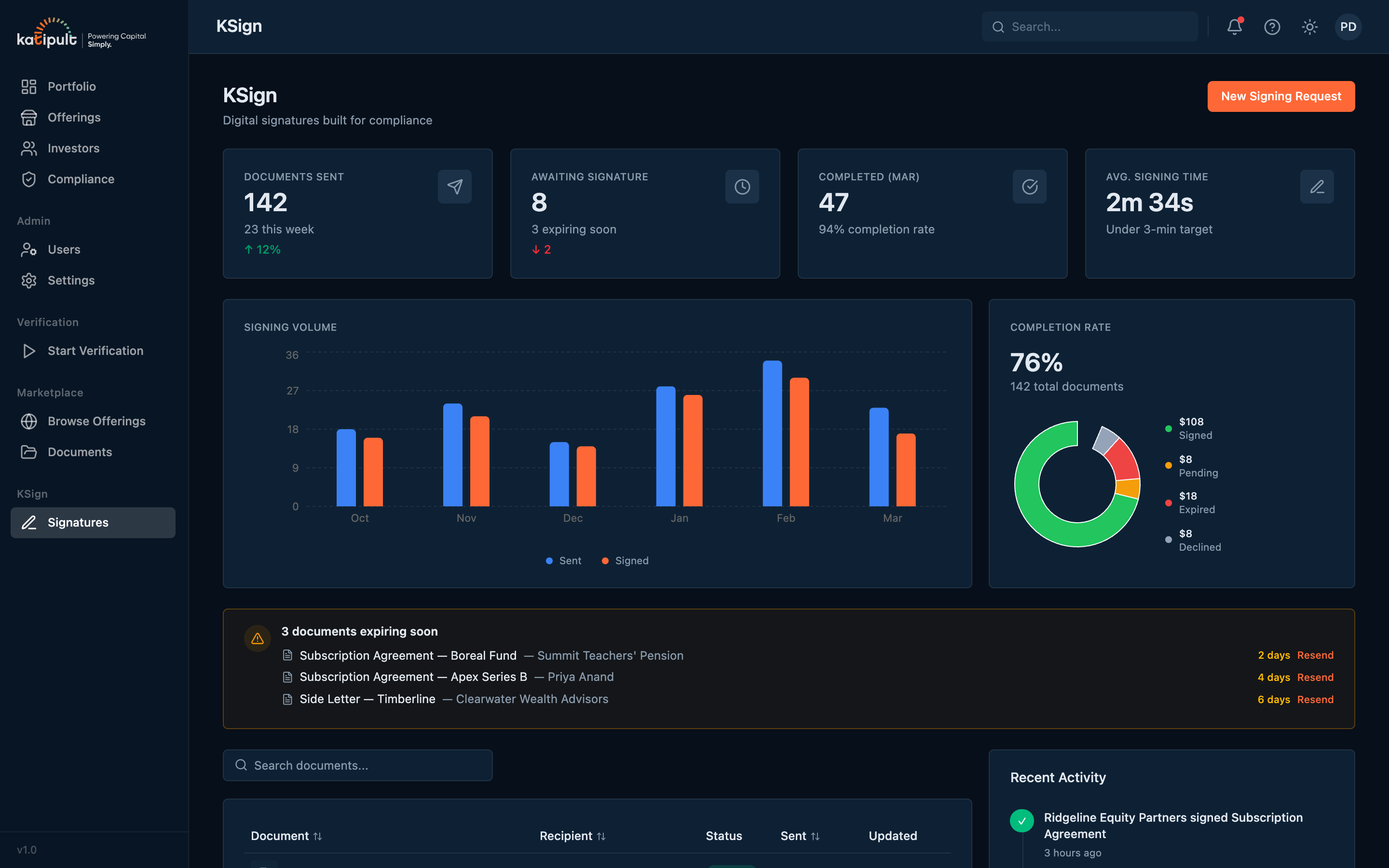
DEALFLOW
Owned product design from startup to IPO (TSX-V). Shipped deal management, portfolio tracking, and investor relations across web and mobile for 150+ enterprise clients. Architected the design system used across the product organization.
Managing deals at enterprise scale
Katipult is a private capital platform that manages billions in transactions across equity, debt, and fund structures. What started as an internal admin tool evolved into a white-label infrastructure serving investment dealers, exempt market dealers, and fund managers globally.
The platform needed to scale from startup tooling to enterprise-grade deal management -- handling complex permission models, multi-jurisdiction compliance, and real-time portfolio tracking.
The infrastructure behind private capital
Katipult powers investment dealers like Canaccord Genuity and TMX Group, providing white-label infrastructure for private capital transactions across equity, debt, and fund structures.
Co-founded as JOI Media in 2008, the company grew from 3 to 49+ employees and completed an IPO on the TSX Venture Exchange. I owned product design throughout that journey -- from early-stage startup through public listing.
Research-driven design decisions
Private capital infrastructure has no obvious design precedent. Before touching a single screen, I mapped the business problem to market reality.
| METRIC | BUSINESS PROBLEM | USER NEED |
|---|---|---|
| 20+ white-label deployments | Each deployment requires custom branding, compliance rules, and asset class configuration | Dealers need a platform that looks and feels like their own brand |
| 150+ target accounts | Enterprise sales cycle requires demonstrable flexibility across deal types | Admins need to configure offerings without developer intervention |
| 6 regulatory jurisdictions | Compliance requirements vary dramatically across markets | Investors need jurisdiction-appropriate KYC flows and disclosures |
| Canaccord, TMX, etc. | Enterprise clients demand institutional-grade security and audit trails | Dealers need confidence that the platform meets their compliance standards |
| KYC drop-off rate | Incomplete verification blocks investment commitments and revenue | Investors need a clear, guided path through identity verification |
How might we design it?
The research table revealed a core tension: enterprise dealers need deep configurability, but investors need simplicity. The HMW statement frames the design challenge that guided every decision across the platform.
How might we design white-label private capital infrastructure flexible enough to serve 3 asset classes, 6 markets, and 20+ regulatory jurisdictions -- so that any investment dealer can deploy a fully compliant, branded investor experience without custom development?
We studied the competitive landscape across private capital platforms, exempt market infrastructure, and emerging retail investment tools to identify gaps and opportunities.
Strong portfolio tracking but outdated UI with steep learning curve. No mobile experience. Desktop-only architecture limits dealer adoption.
Good deal discovery but limited investor tools. No commitment flow -- redirects to external portals for actual transactions.
Modern UI with comparison features but lacks compliance integration. Separate KYC flow required, breaking the investment journey.
Excellent mobile experience and onboarding. Limited institutional features and reporting capabilities for enterprise dealers.
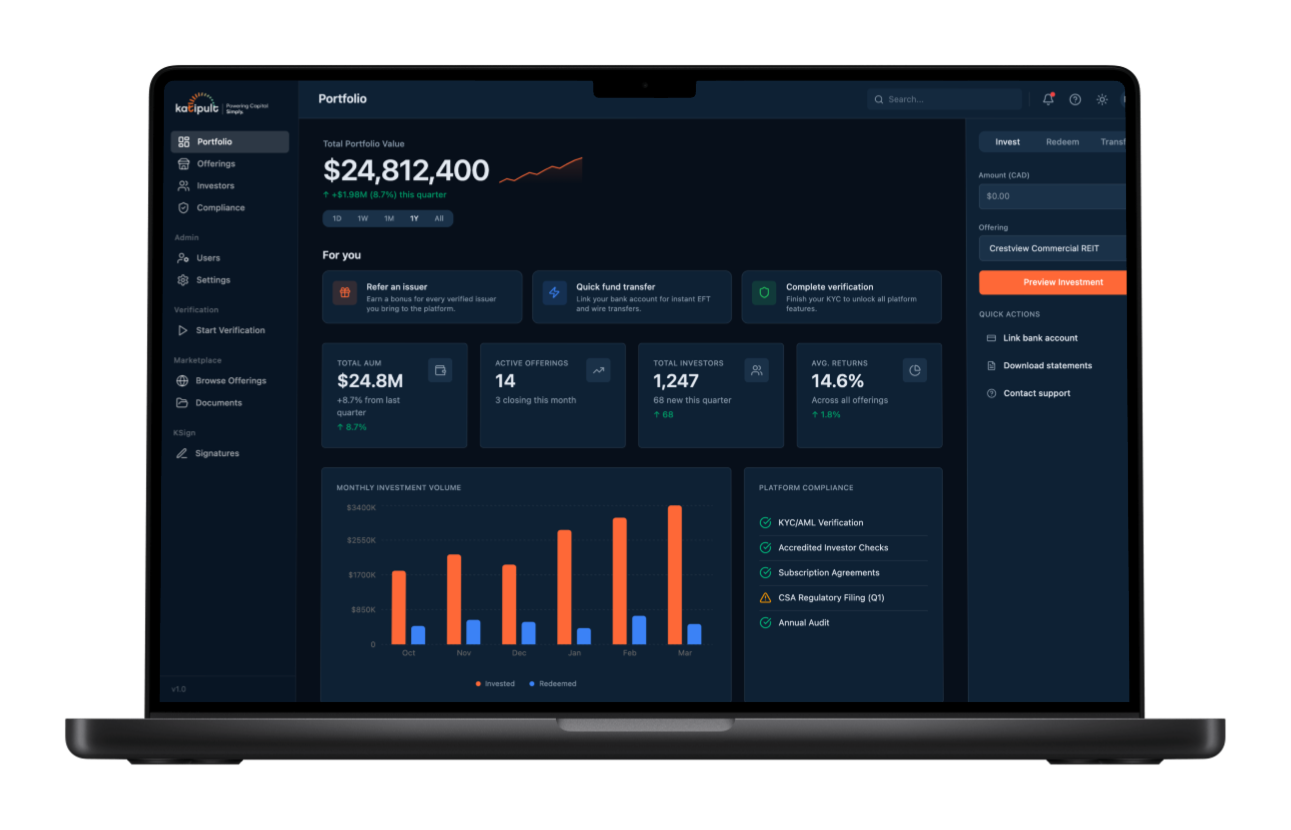
Portfolio performance at a glance
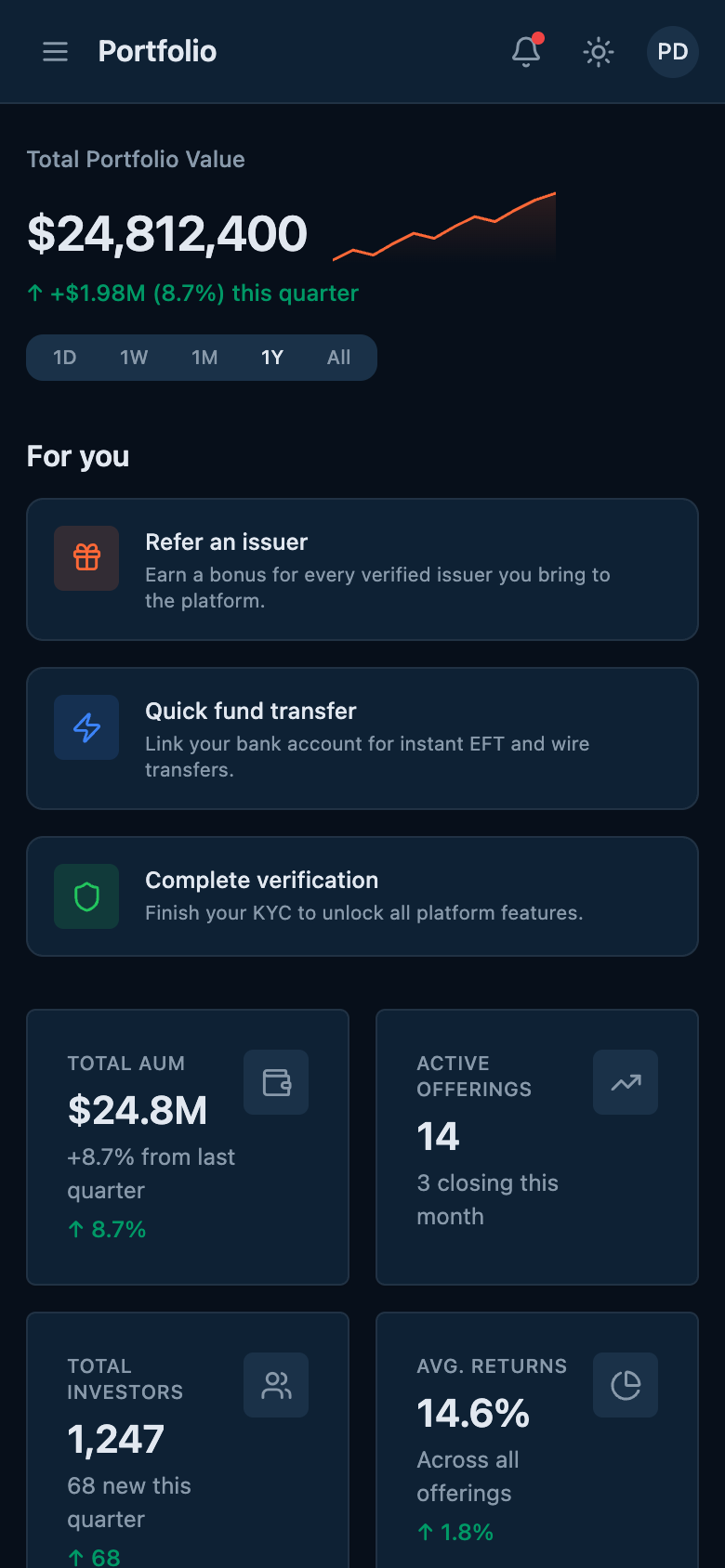
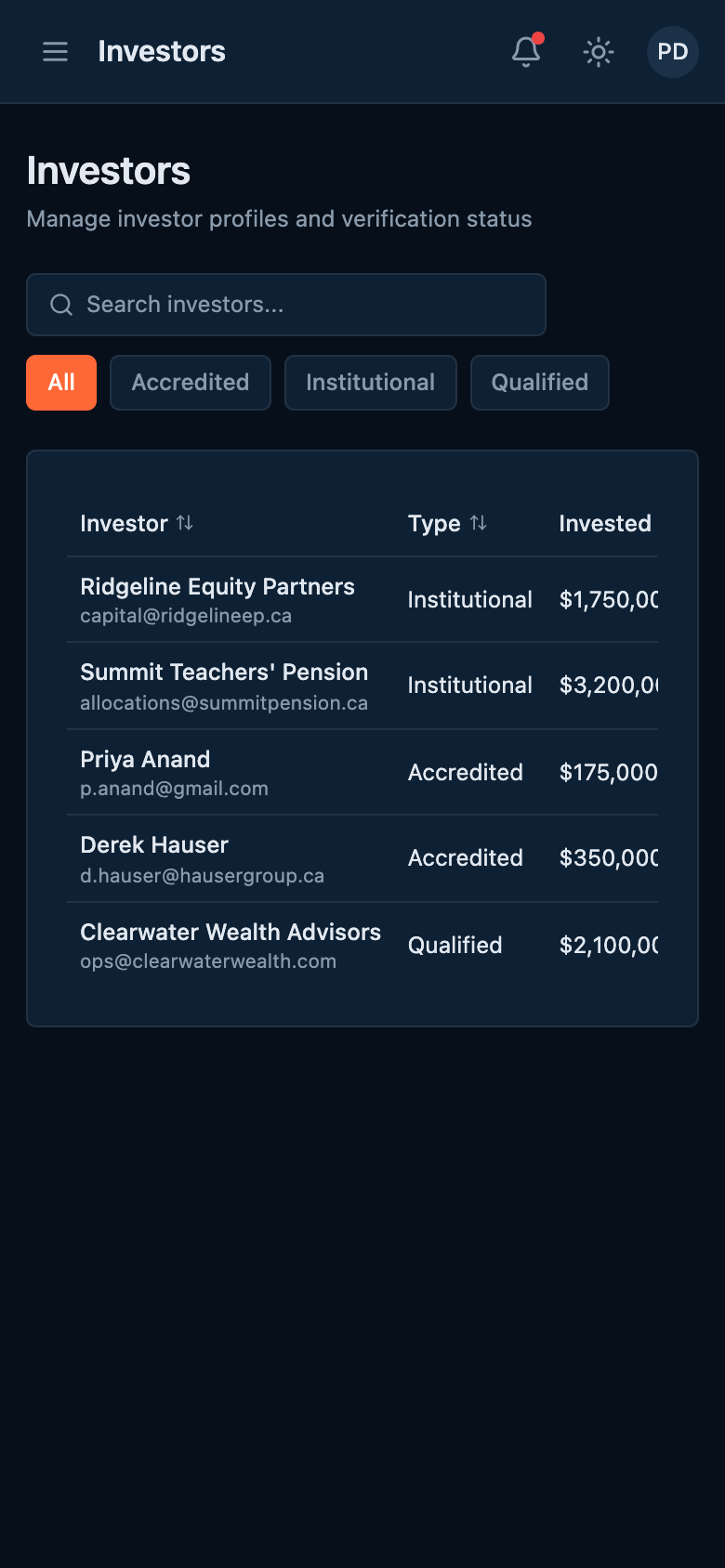
The investor dashboard gives users a single view of their holdings, returns, and activity across all offerings. Designed to surface the most important information first -- total portfolio value, recent distributions, and pending actions.
Used a modular card layout so dealers could configure which metrics appear for their investors. Some dealers show IRR, others show simple returns -- the system adapts to each deployment.
Multi-asset deal management
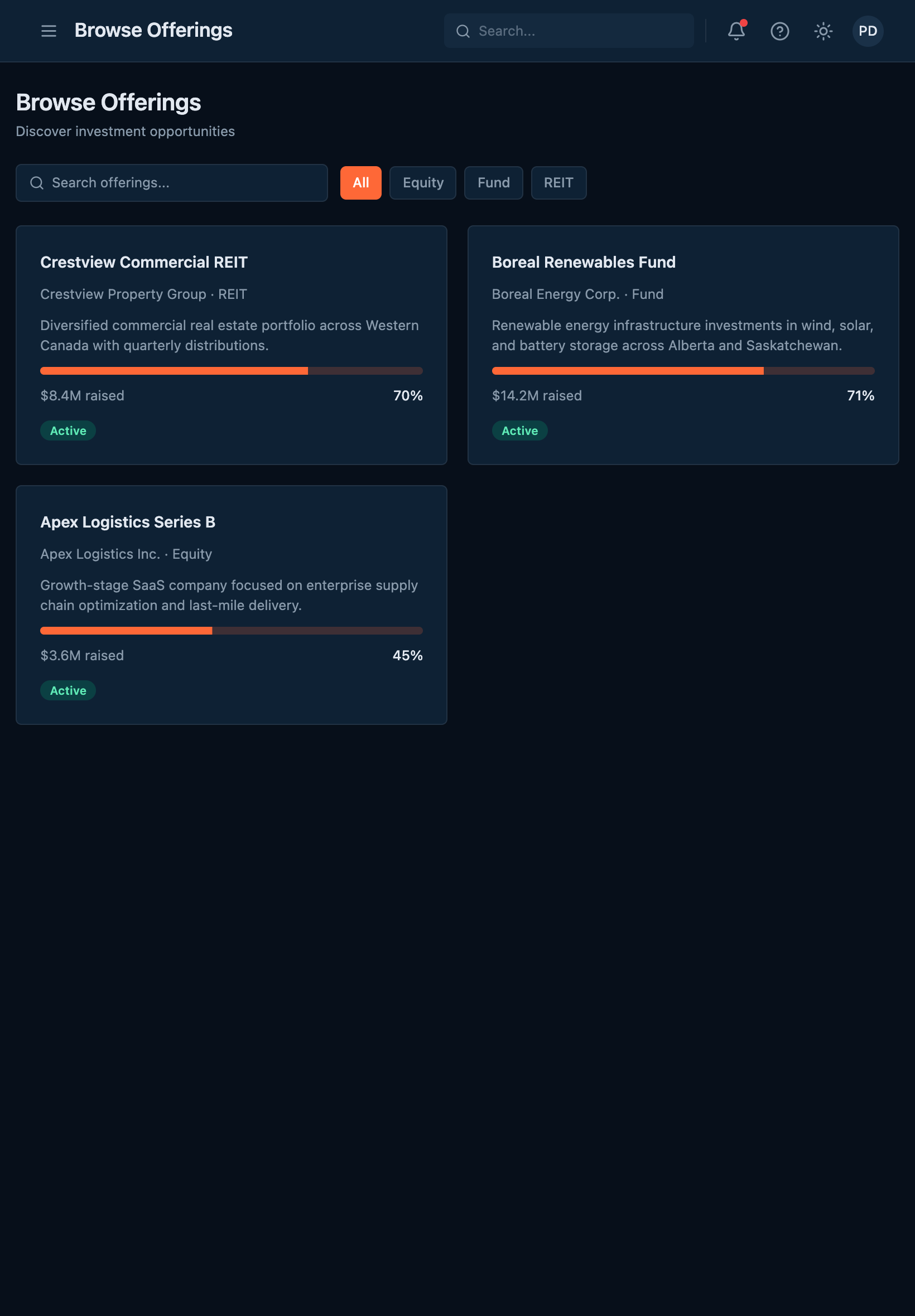
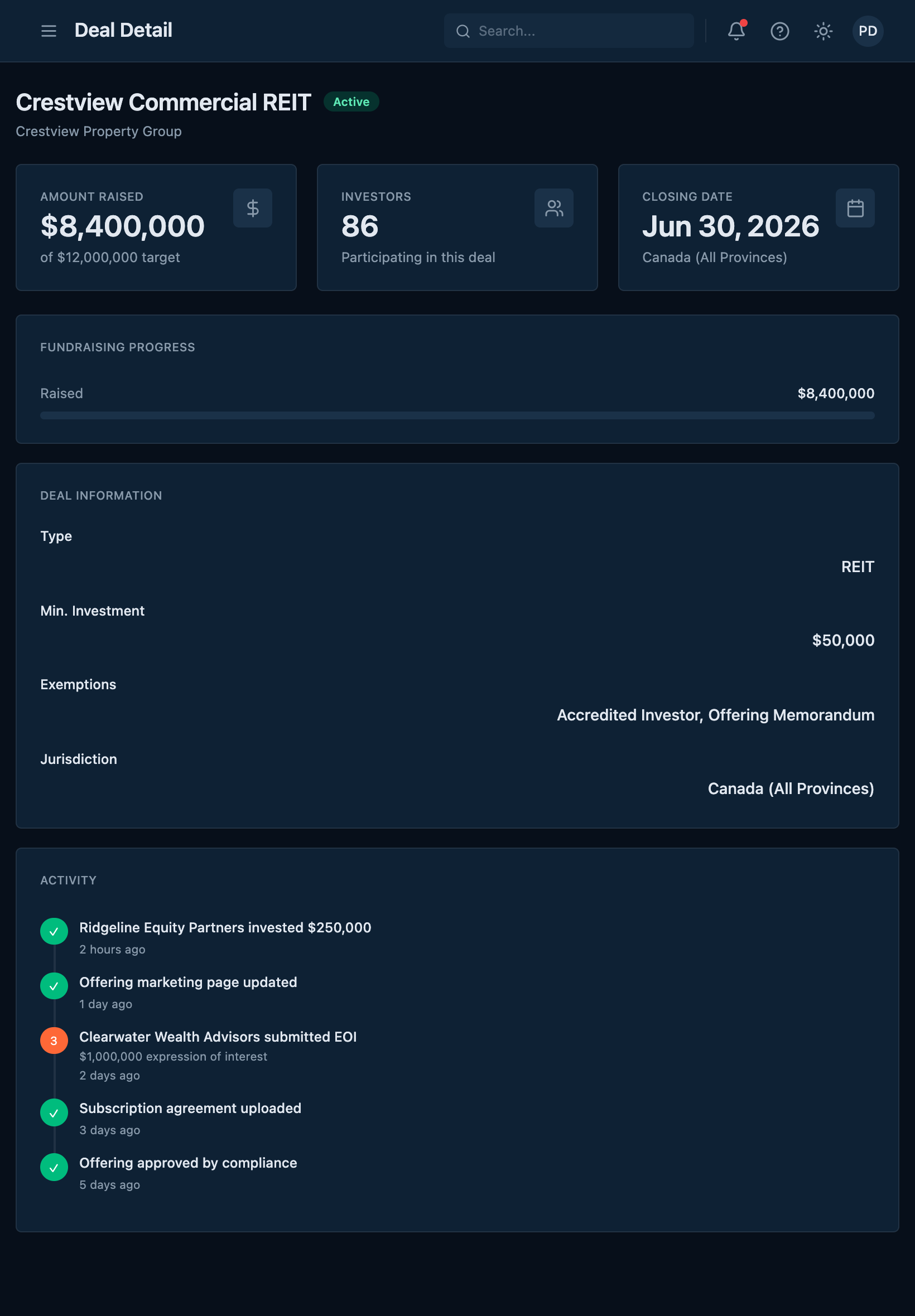
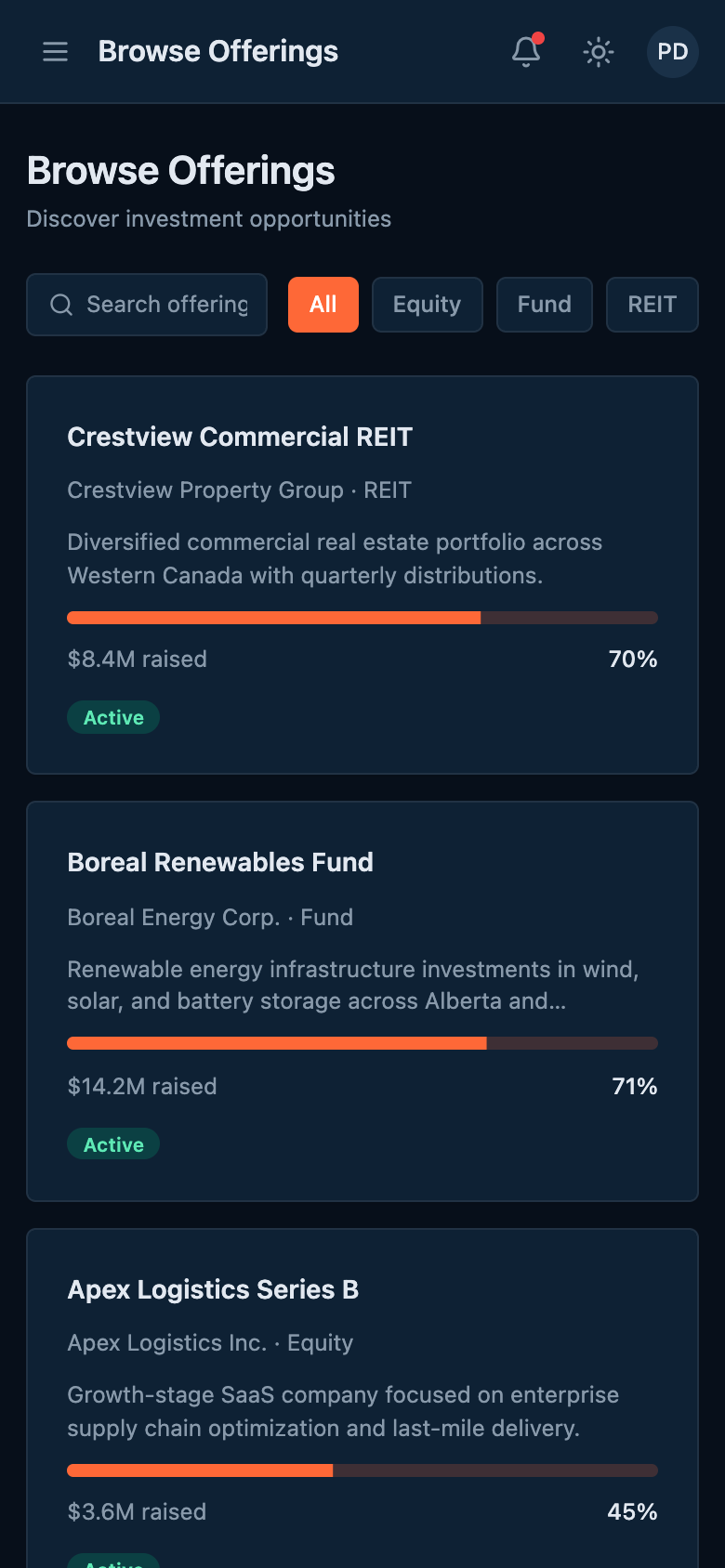
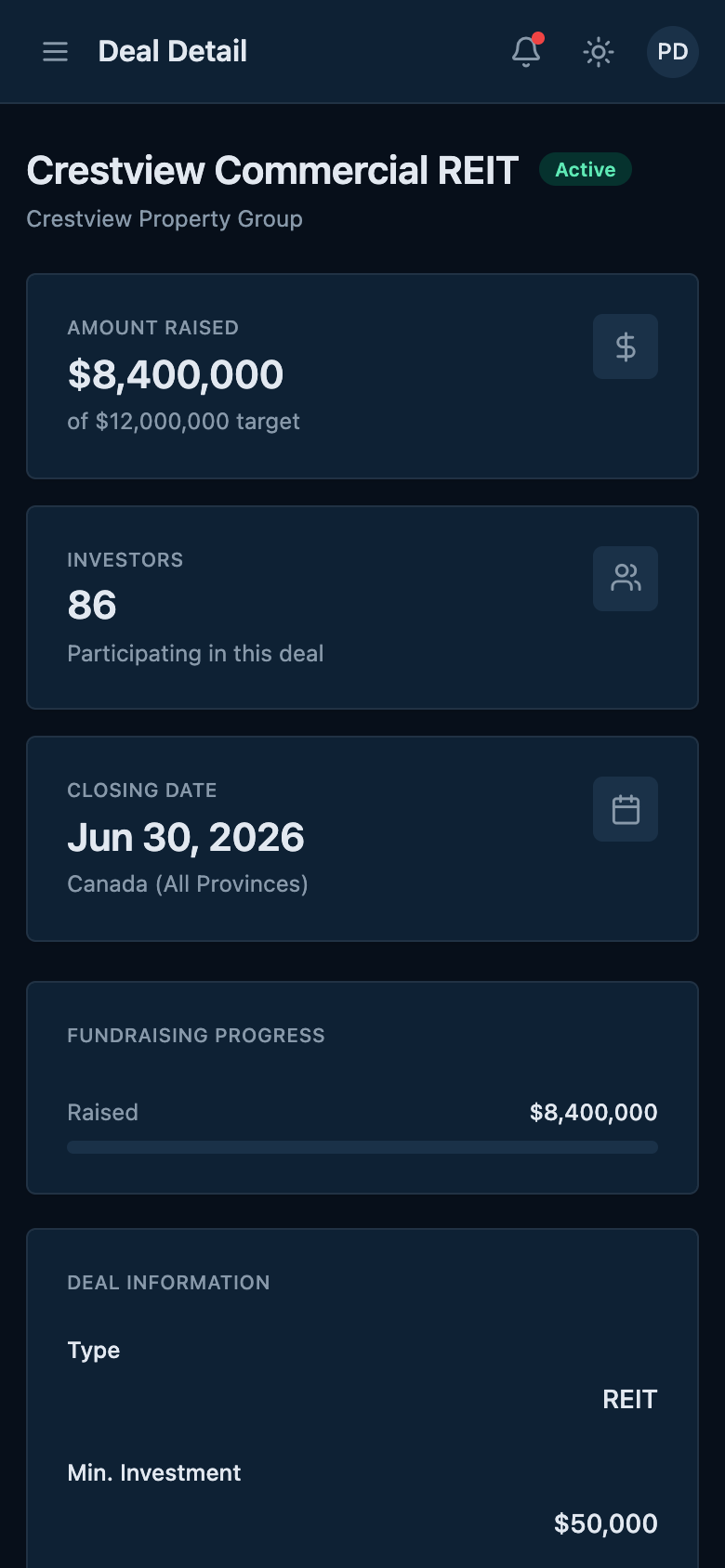
The browse experience handles equity offerings, debt instruments, and fund structures through a single unified interface. Investors can filter by asset class, risk profile, minimum investment, and closing timeline.
Built a unified browse UI that adapts its display fields based on asset class. Equity shows share price and valuation, debt shows yield and maturity, funds show NAV and distribution schedule -- all within the same card pattern.